Chula Vista Plumbing Now

Call (619) 558-3293

No hot water, leaking, or a unit acting up?

Water Heater Repair Chula Vista — Tank and Tankless Service

Water heater repair Chula Vista is the focus of this local guide. No hot water, inconsistent temperature, strange noises, or a leaking water heater in Chula Vista, California? Call (619) 558-3293 for licensed diagnosis and repair. Going without hot water is more than an inconvenience for a lot of households — especially with kids or elderly family members at home — and we treat "no hot water" calls with real urgency rather than scheduling them like a routine maintenance visit.

C-36 Licensed
Honest Repair-vs-Replace Advice
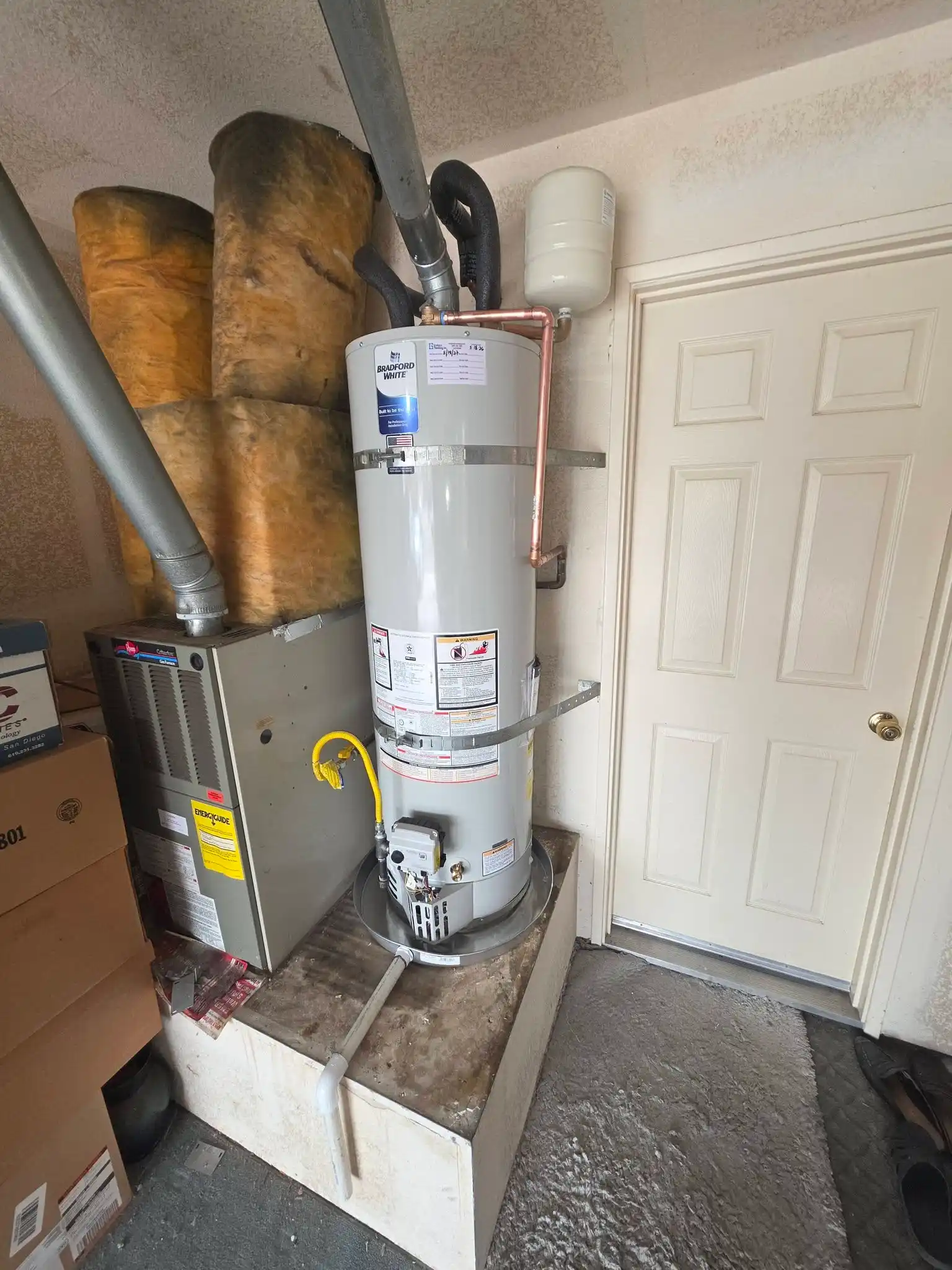
Gas water heater installed in a Chula Vista garage
Licensed water-heater diagnosis and repair in Chula Vista.

Immediate safety guidance

Safety First: If You Smell Gas

This is the one section on this page we want you to read before anything else, even if it's not why you came here. If you smell gas near your water heater, do not attempt to light a pilot light, flip any switches, or investigate further yourself. Leave the area, avoid creating any spark or flame, and call your gas utility's emergency line and a licensed plumber. This applies whether or not you're also experiencing a "no hot water" symptom — a gas smell takes priority over everything else on this page. See our Emergency Plumbing page for broader guidance on what counts as a true plumbing emergency.

Call Now

Key takeaways

  • No hot water at all is usually diagnosable quickly — common causes include a tripped breaker, a failed heating element, or a pilot light issue, depending on tank vs. tankless and gas vs. electric
  • We'll tell you honestly when repair makes sense versus when replacement is the smarter call, based on your unit's age and repair cost — not just what's more profitable for us
  • A gas smell near your water heater is a safety issue — see the safety note below before doing anything else
  • Tank and tankless systems fail differently and get different diagnostic approaches
  • Call (619) 558-3293 — describe what you're noticing and we'll help you figure out next steps

Knowing roughly what you're dealing with helps

Common Water Heater Problems We Diagnose and Repair

Water heater problems tend to fall into a fairly predictable set of categories, and knowing roughly which one you're dealing with helps you describe the issue clearly when you call — even if you're not sure of the exact cause.

No Hot Water at All

Often a tripped breaker or failed heating element (electric units), or a pilot light that's gone out or won't stay lit (gas units).

Inconsistent or Fluctuating Temperature

Can point to a failing heating element, thermostat issue, or sediment buildup affecting heat transfer.

Not Enough Hot Water for Your Household

Sometimes a sizing mismatch from day one, sometimes a sign of declining tank capacity from sediment buildup.

Discolored or Rusty Hot Water

Often indicates corrosion inside an aging tank — a strong signal the unit's remaining lifespan is limited.

Unusual Noises (Popping, Rumbling, Banging)

Commonly caused by sediment buildup at the bottom of the tank being disturbed by the heating cycle.

Leaking or Pooling Water Around the Unit

Ranges from a loose fitting (simple fix) to a failing tank (replacement territory) — one of the more urgent symptoms, since a fully failed tank can release its entire contents at once.

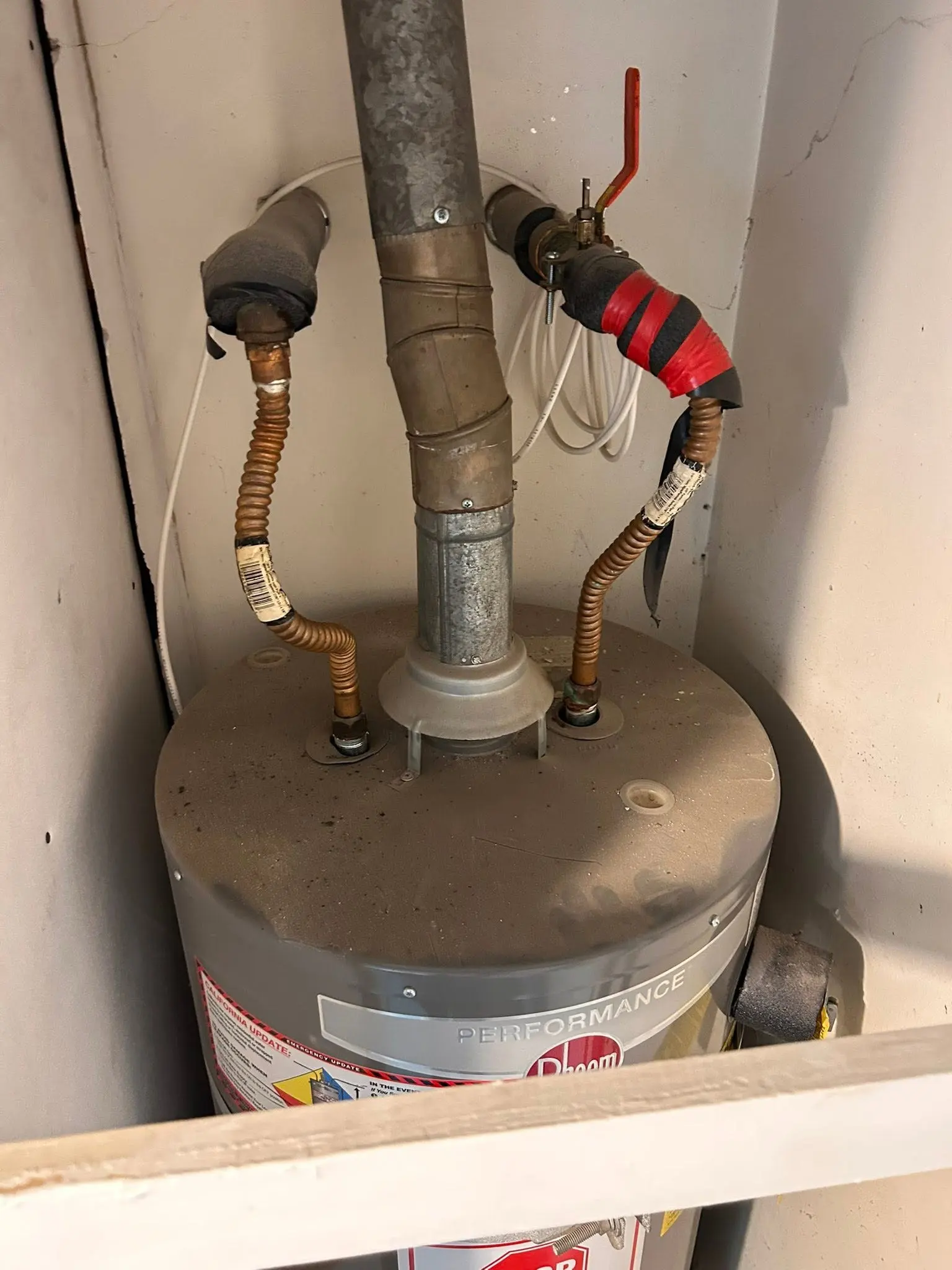
Water heater shutoff valve repair on a Chula Vista job
Shutoff valve service on a Chula Vista water heater.

Pilot light won't stay lit (gas units) — often a thermocouple issue, though this should be diagnosed rather than assumed.

These are genuinely different systems

Tank vs. Tankless: Different Systems, Different Troubleshooting

Traditional Tank Water Heaters

Store and continuously heat a set volume of water, and most of their common failures — sediment buildup, heating element failure, thermostat issues, tank corrosion — are tied to the tank itself and its age. Minerals in water settle at the bottom of the tank over years of use, insulating the heating element from the water above it, which both reduces efficiency and causes the popping/rumbling noises many homeowners notice before anything else goes wrong.

Tankless Water Heaters

Heat water on demand rather than storing it, which eliminates tank-corrosion and sediment-buildup-in-a-tank as failure modes but introduces different issues: mineral scale buildup inside the heat exchanger (a bigger concern in hard-water areas), ignition failures, and flow-sensor problems that can cause inconsistent temperature or the unit failing to activate at low flow rates. Regular descaling matters more for a tankless unit's longevity than most homeowners realize when they first switch over from a tank system.

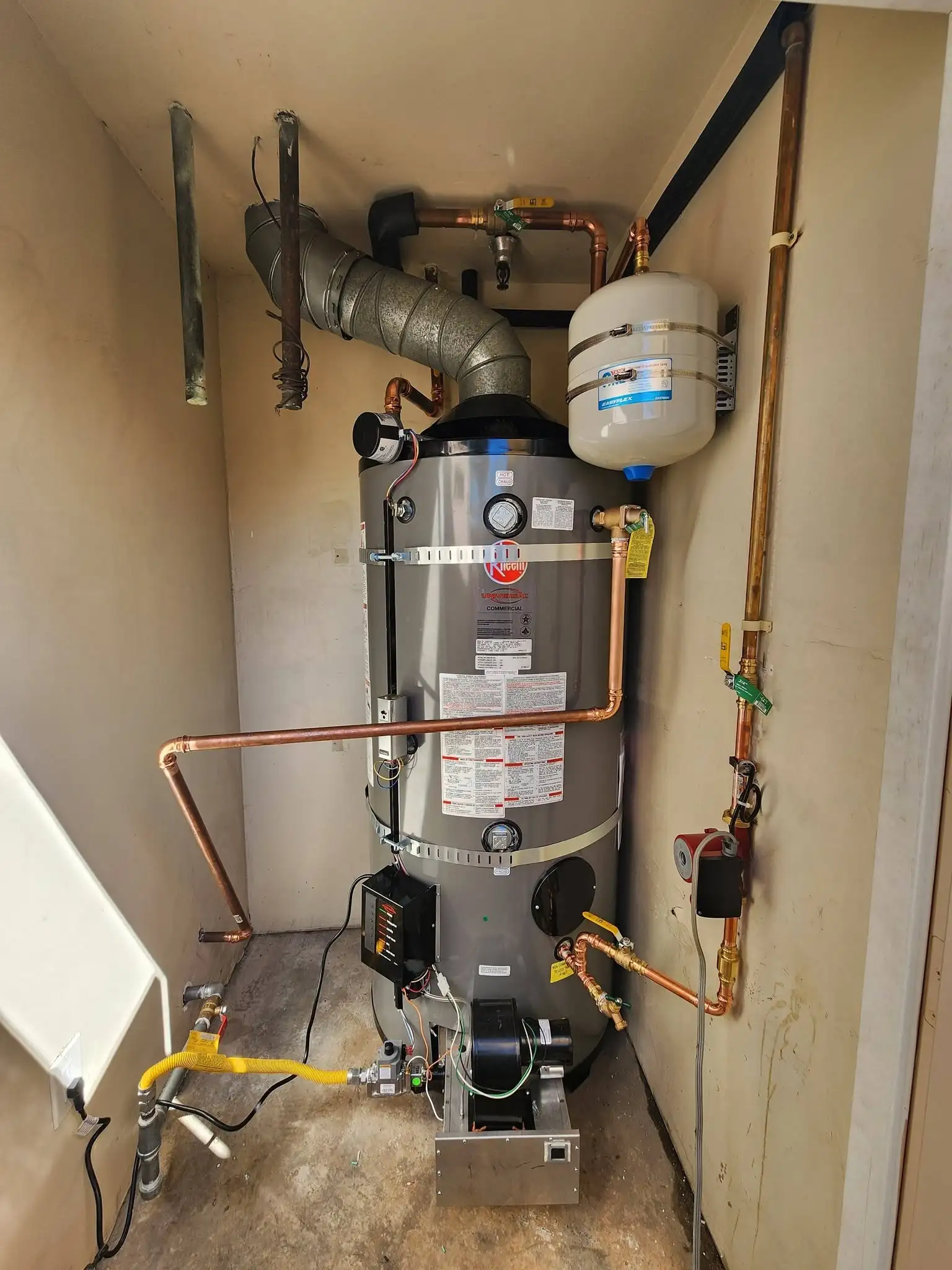
Tankless water heater system installed on a Chula Vista job
A tankless water heater system installed in Chula Vista.

These systems have grown in popularity for their space savings and continuous hot water supply, but that doesn't mean they're maintenance-free. If you have a tankless system and are experiencing problems, mention that specifically when you call — tankless diagnosis and repair genuinely requires different expertise and sometimes different parts than a tank system.

Different fuel source, different failure points

Gas vs. Electric Water Heaters

Gas Water Heaters

Rely on a pilot light or electronic ignition, a thermocouple (a safety device that shuts off gas flow if the pilot goes out), and a gas valve — most "no hot water" gas-unit calls trace back to one of these three components. Never attempt to relight a pilot light if you smell gas — see the safety section above.

Electric Water Heaters

Rely on one or two heating elements and a thermostat — most "no hot water" electric-unit calls trace back to a tripped breaker, a failed element, or a thermostat malfunction. It's reasonable to check your breaker panel first — a simple reset sometimes resolves the issue, though a breaker that keeps tripping repeatedly is itself a sign of a real electrical problem worth having diagnosed rather than just reset again.

Genuinely extends usable life

Water Heater Maintenance: What Homeowners Can Do

  • Annual tank flushing (for tank units) helps clear sediment before it builds up enough to cause the noises and efficiency loss described above.
  • Checking the T&P relief valve periodically confirms it isn't stuck or leaking — a genuine safety component, not just a maintenance formality, since it releases pressure if the tank ever overheats.
  • Insulating exposed hot water pipes in unconditioned spaces (garages, attics) reduces heat loss and can modestly reduce how hard the unit has to work.
  • For tankless units, periodic descaling (especially in harder-water areas) prevents the mineral scale buildup that's the leading cause of reduced efficiency and flow problems.
  • Knowing your unit's age and type before something goes wrong means you're not trying to find a model number during an active "no hot water" situation — worth writing down or photographing the unit's label now.
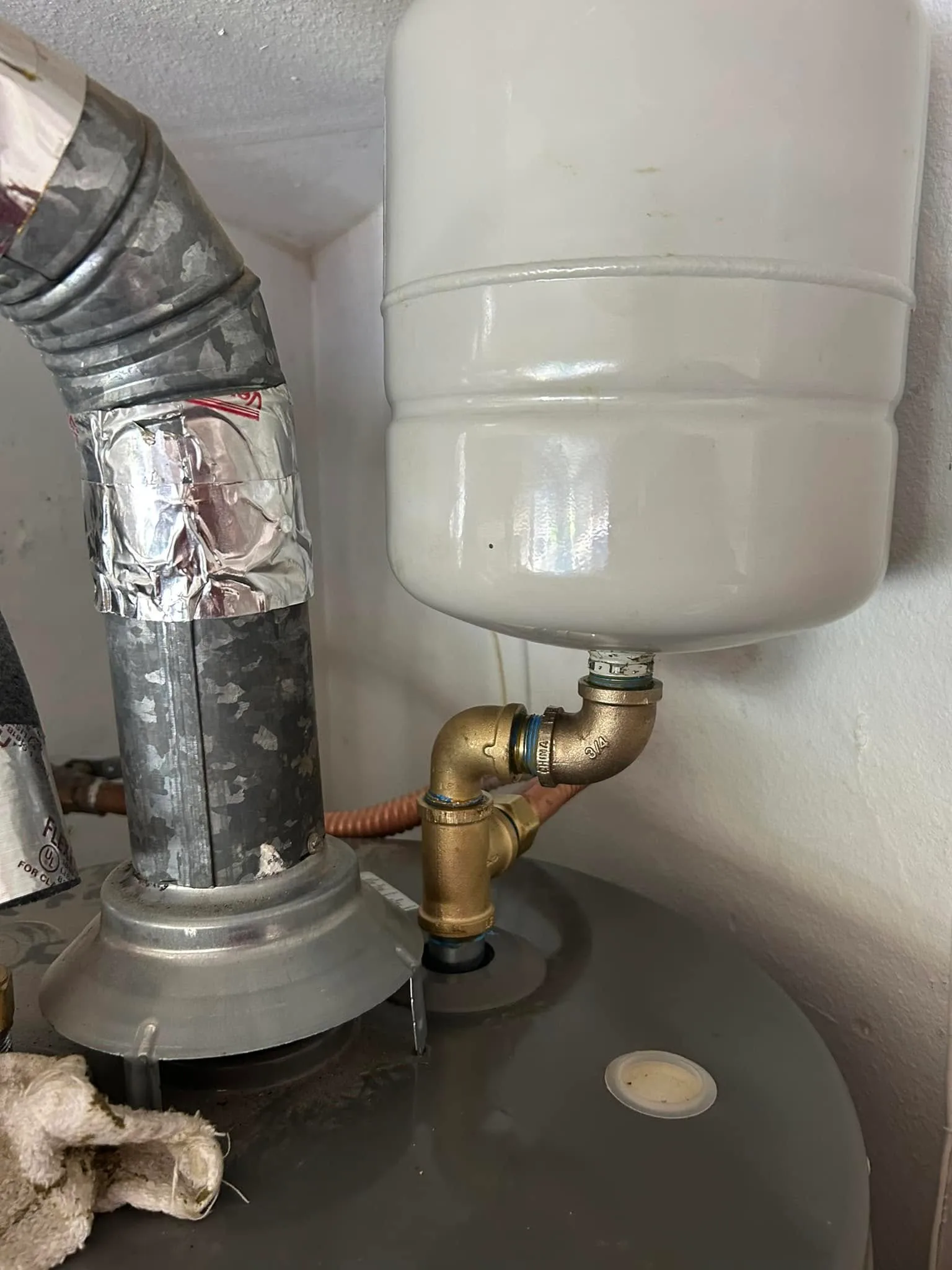
Water heater expansion tank connection on a Chula Vista job
Expansion tank connection checked during a maintenance visit.

We're happy to walk through basic maintenance guidance specific to your unit when we're out for a repair visit, even if maintenance itself wasn't why you called — a five-minute conversation during an unrelated repair often prevents the next unrelated call.

Especially in combination

Signs Your Water Heater Is Near the End of Its Life

Visible rust on the tank exterior, particularly near fittings or the bottom seam — can indicate internal corrosion now reaching the tank's outer shell, harder to reverse with a simple repair.

Rusty or metallic-tasting hot water that clears after running for a bit, but keeps returning — a recurring sign of internal tank corrosion rather than a one-time fluke.

At or past the upper end of its expected service life (roughly 8-12 years for most tank units) and now showing any other symptom on this page, even a minor one.

Increasing frequency of any symptom — noises that used to be occasional and are now constant, temperature that used to be reliable and is now unpredictable.

Rising energy bills without a clear other explanation, which can indicate declining efficiency from sediment buildup or an aging heating element working harder than it should.

None of these alone is a guaranteed sign of imminent failure, but multiple signs together are worth a real inspection rather than waiting for a full breakdown, which typically happens at an inconvenient time and sometimes with water damage attached. A scheduled inspection on a unit showing early warning signs is a considerably better experience than an emergency call after a tank has already failed and started leaking.

The honest factors, not the profitable answer

Repair vs. Replace: How to Think About the Decision

This is the question almost every water heater call eventually comes down to, and we'd rather walk you through the honest factors than default to whichever answer is more profitable for us:

Age

Most tank water heaters have a service life in the general range of 8-12 years, with tankless units often lasting longer with proper maintenance. A unit near or past the upper end of that range that's failing is usually a better replacement candidate than repair candidate, even if the specific repair itself would be relatively minor.

Repair Cost Relative to Replacement Cost

If a repair is a small fraction of what a new unit would cost and the unit is otherwise in good condition, repair is usually the right call. As repair cost climbs closer to a meaningful percentage of replacement cost on an older unit, replacement starts making more financial sense.

Repeat Failures

A unit that's needed more than one repair in a short period is often signaling broader decline rather than a single isolated issue — worth weighing even if each individual repair looks affordable on its own.

Efficiency and Household Needs

If your household's hot water needs have grown since the unit was installed, replacement with a properly sized unit sometimes solves a "not enough hot water" problem that repair alone wouldn't fully address.

We'll walk through these factors with you directly when we diagnose your unit, and we'll tell you plainly which side of the decision your specific situation falls on — including when repair is clearly the better call, not just when replacement is. If replacement is the right recommendation, we'll be upfront about that being outside this specific page's scope and point you toward our Water Heater Installation/Replacement page (page in development) rather than leaving you without a next step.

If you're unsure, call anyway

When to Call Immediately vs. When You Can Schedule

Call Immediately

A gas smell, active leaking or pooling water, or a complete loss of hot water in a household with infants, elderly residents, or anyone with a medical need for reliable hot water access. See our Emergency Plumbing page for full guidance.

Can Typically Be Scheduled

Inconsistent temperature that hasn't gotten dramatically worse, unusual noises without any leaking, or reduced hot water capacity that's manageable in the short term. If you're unsure which category your situation falls into, call anyway — we'd rather help you make that call than have you guess.

No fixed price, real transparency

What Affects Water Heater Repair Cost

We don't publish a fixed repair price because it depends heavily on what's actually wrong, your unit's age and type (tank vs. tankless, gas vs. electric), and whether parts need to be sourced for an older or less common model. What we can tell you: diagnosis comes first, a real written estimate comes before any repair work begins, and if replacement turns out to be the more honest recommendation, we'll explain exactly why rather than just quoting a repair you're not sure is worth it. See our full Plumbing Cost & Pricing Guide for how our estimate process works generally.

Parts availability. Whether the failed part is common and readily available versus something that needs to be sourced for an older or less common model.

Installation location. Whether the location adds labor time — a garage unit versus a tight attic or closet installation.

Code-compliance issues discovered during the repair that weren't part of the original problem — for example, an older installation that wasn't up to current code when installed, which sometimes needs to be addressed as part of any significant repair work. We'll flag any code-related finding clearly and separately from the original repair, rather than folding it silently into one larger number you can't evaluate piece by piece.

Faster resolution, real documentation

Water Heater Repair for Rental Properties, HOAs, and Multi-Unit Buildings

Water heater failures at rental and multi-unit properties carry extra urgency and coordination considerations beyond a single-family home call. A failed unit affecting multiple tenants needs faster resolution than a single household's inconvenience, and property managers often need documentation of the diagnosis and repair for their own records or tenant communication. If you manage rental units, an HOA-governed property, or a commercial building, see our commercial and property-manager plumbing page for how we handle multi-unit water heater diagnosis, prioritization, and coordination with building management.

Not a generic national troubleshooting guide

Chula Vista-Specific Water Heater Considerations

A few conditions specific to this area are worth knowing before you compare your unit's symptoms against a generic national troubleshooting guide. Water hardness and installation location both genuinely affect water heater lifespan and failure patterns here. Harder water accelerates sediment buildup in tank units and scale buildup in tankless heat exchangers, which means homes on the harder end of the local water-hardness range may see symptoms like reduced efficiency and unusual noises show up sooner than a generic national lifespan estimate would suggest. Installation location also matters for both diagnosis and repair timeline — a water heater in an easily accessible garage is a more straightforward service call than one in a tight attic space or an interior closet, which is worth mentioning when you call so we can plan accordingly.

Verify before you book

Verify We're Licensed Before You Book

Chula Vista Plumbing Now holds an active California C-36 plumbing contractor license. You can verify any contractor's license for free through CSLB's online license lookup tool — we'll provide our license number directly when you call.

Frequently Asked Questions

Water Heater Repair FAQs

Common causes include a tripped breaker or failed heating element (electric units) or a pilot light that's gone out (gas units). If you smell gas, don't investigate further yourself — see the safety section above and call immediately.
It depends on your unit's age, the repair cost relative to a new unit, and whether it's had repeat failures recently. See "Repair vs. Replace: How to Think About the Decision" above for the honest factors we walk through with every customer.
Tank water heaters generally have a service life in the range of 8-12 years; tankless units often last longer with proper maintenance. A failing unit near or past that range is usually a stronger replacement candidate than repair candidate.
Yes — active leaking or pooling water should be treated as urgent, since a fully failed tank can release its entire contents at once. See our Emergency Plumbing page for guidance on what to do while waiting for help.
Leave the area immediately, don't attempt to relight a pilot light or flip any switches, avoid creating a spark or flame, and call your gas utility's emergency line and a licensed plumber right away. This takes priority over any other symptom.
Yes — tankless systems fail differently (scale buildup in the heat exchanger, ignition or flow-sensor issues) than tank systems (sediment buildup, heating element failure, tank corrosion). Mention if you have a tankless unit when you call so we bring the right diagnostic approach.
It depends on what's wrong, your unit's type and age, and parts availability. We don't publish a fixed price because an accurate number requires diagnosis first — see our pricing guide for how our estimate process works.
This is commonly caused by sediment buildup at the bottom of a tank unit, which insulates the heating element from the water and gets disturbed during heating cycles. It's worth having diagnosed rather than ignored, since it's often an early sign of declining tank condition.
Annual tank flushing is a maintenance task some homeowners handle themselves, though it does require knowing the correct shutoff and drain procedure for your specific unit. If you're not confident doing it safely, or if it's been years since the last flush and you're not sure what condition the tank is in, having it done professionally the first time is a reasonable choice.
Yes — multi-unit and rental-property water heater failures often need faster turnaround and documentation for property management records. See our property manager and commercial plumbing page for how we coordinate that.
Yes — a unit in an easily accessible garage is typically a more straightforward service call than one in a tight attic space or interior closet, which can add labor time. Mention your installation type when you call so we can plan accordingly.

No hot water? Let's fix that.

An Honest Diagnosis and a Straight Answer

Whether it's a complete loss of hot water or something that's just not working quite right, call (619) 558-3293 for an honest diagnosis and a straight answer on repair vs. replace. We'd rather give you the real recommendation, even when it's "replace, not repair," than sell you a fix that won't hold up.

Call (619) 558-3293

Part of our full range of Plumbing Services — or head back to the homepage.

Local planning guidance

Water Heater Repair Chula Vista Planning Guide

No hot water, unstable temperature, leaks, noise, error codes, and gas odors do not all point to the same repair. Useful decisions begin with the system type, symptom pattern, safety conditions, and an honest comparison of repair versus replacement.

Start With the Symptoms

When comparing water heater repair chula vista, begin with the symptoms rather than a preferred repair. Note when the problem started, whether it is constant or intermittent, which fixtures or areas are affected, and what changed just before it appeared. For homeowners, tenants, landlords, and property managers, that short history helps distinguish an isolated nuisance from a system issue. Photographs, utility-bill changes, and a simple timeline can make the first conversation more useful while keeping attention on the actual condition instead of assumptions.

Match the Service to the Cause

The right water heater repair chula vista approach depends on identifying the cause before selecting equipment or authorizing work. Tank and tankless systems, gas and electric equipment, controls, heating components, venting, water quality, pressure, and installation conditions create different failure patterns and testing needs. A careful evaluation connects the visible symptom to the most likely source, considers access and surrounding materials, and explains what can be confirmed now versus what may require an additional test. That process supports a proportionate recommendation and reduces the chance of paying for a temporary response to a recurring problem.

Plan for Access and Property Conditions

Before scheduling water heater repair chula vista, consider how the property itself may affect access and sequencing. Garage, closet, exterior, attic, and utility-area installations can present different access, drainage, venting, combustion-air, and protection considerations in Chula Vista properties. Clear access to shutoffs, equipment, cleanouts, work areas, and parking can shorten setup time. If walls, flooring, landscaping, tenants, pets, gates, or association rules are involved, sharing those details early helps the visit proceed with fewer surprises and allows protective measures to be planned before work begins.

Understand the Estimate

A written water heater repair chula vista estimate should separate the known scope from conditions that cannot be confirmed until access or testing occurs. Useful estimates describe labor, materials, included cleanup, expected disruptions, and any choices that could change the total. The scope may be influenced by diagnosis, failed components, unit age and condition, access, code-related corrections, venting, connections, disposal, permits when applicable, and whether repair remains economical. Asking what is included, what would trigger a change order, and what alternatives exist makes it easier to compare recommendations on equal terms instead of focusing only on the first number.

Coordinate Timing and Communication

Good water heater repair chula vista communication includes timing, access, water shutoff needs, and a realistic explanation of what occupants may experience. Someone should provide the model information if available, describe hot-water demand and symptoms, clear safe access, and understand any period when water or energy service must be interrupted. A clear point of contact, current phone number, and approval process are especially helpful when the person authorizing work is not at the property. Confirming these details in advance keeps decisions moving and helps everyone understand the next step without relying on vague arrival or completion promises.

Reduce Repeat Problems

Timely water heater repair chula vista work should address the immediate concern while also considering why it happened. Flushing or descaling when appropriate, checking visible leakage, monitoring temperature changes, and addressing pressure or water-quality concerns can support service life without guaranteeing that aging components will not fail. Prevention does not mean replacing everything or purchasing unnecessary maintenance. It means identifying practical actions—such as monitoring a fixture, correcting usage patterns, scheduling an appropriate inspection, or planning a future upgrade—that match the condition, age, and risk of the system.

Know When the Situation Is Urgent

Requests for water heater repair chula vista can become urgent when there is uncontrolled water, sewage exposure, a gas odor, electrical risk, property damage, or loss of an essential fixture. A gas odor, active tank rupture, water near electrical equipment, scorching, unsafe venting, or rapidly spreading leakage requires immediate safety action rather than ordinary troubleshooting. When safety is uncertain, stop using the affected system, protect people from the area, and describe the exact condition when calling. A calm description of what is happening helps determine whether immediate action, a utility response, or a normally scheduled visit is appropriate.

Confirm the Work Before Completion

After water heater repair chula vista, review what was found, what was completed, and what remains to be watched. The final review should cover restored operation, temperature settings, visible leak checks, any safety limitations, maintenance guidance appropriate to the unit, and the reasons behind repair or replacement recommendations. Keep estimates, invoices, photographs, model information, and maintenance notes with the property records. If a symptom returns, those records give the next technician useful context and help distinguish a new problem from the original condition. Clear closeout information is part of a professional service experience, not an optional extra.

When requesting water heater repair Chula Vista residents should identify whether the unit is tank or tankless, gas or electric, its approximate age, the exact symptom, and any leak or odor. That information supports safer and more efficient diagnosis.

✓ CSLB Certified Technical Review
MM

Reviewed by Marco Morales

California C-36 Licensed Master Plumber (CSLB #984120) • Senior Technical Director

This guide has been reviewed for technical accuracy, safety standards, and strict adherence to the California Plumbing Code (CPC Title 24), Uniform Plumbing Code (UPC), and local City of Chula Vista Building & Safety Division municipal codes. All repair methodologies reflect standard commercial and residential best practices for San Diego County water quality and municipal lateral specifications.