
Garbage Disposal Service · Chula Vista, CA
Garbage Disposal Repair Chula Vista: Expert Repair & Installation
A garbage disposal is one of the more heavily used, least thought-about appliances in a kitchen — until it hums instead of grinding, leaks onto the cabinet floor beneath the sink, or goes completely silent when you flip the switch. When you need reliable garbage disposal repair Chula Vista homeowners trust, this page covers the most common problems, which ones you can handle yourself, when to call a plumber, and what to know about installing a new unit if repair isn't the right call.
Key takeaways:
Common Garbage Disposal Problems and What They Usually Mean
Most disposal complaints fall into a handful of recognizable patterns, and the right fix depends on which one you're actually dealing with:
Each of these gets its own section below, because treating “my disposal isn't working” as a single problem tends to lead to the wrong fix.
Humming But Not Spinning: Jams and Stuck Flywheels
If your disposal hums when switched on but the blades don't turn, the motor itself is very likely fine — something mechanical is preventing the flywheel from rotating. The most common cause is a small object (a bottle cap, a fruit pit, a piece of bone) wedged between the flywheel and the grind ring, physically blocking rotation.
A stuck flywheel can also result from mineral buildup or corrosion if the disposal hasn't been run in a while. This is one of the more genuinely DIY-fixable disposal issues — see the DIY section below — but if clearing the jam doesn't restore normal spinning, or if the humming continues even after the obstruction is cleared, that usually points to a failing motor bearing or capacitor, which is a repair or replacement conversation rather than a quick fix.
Leaking From Underneath: Worn Seals and Cracked Housings
A disposal leaking from underneath the unit is almost always one of two things: a worn internal seal (commonly where the sink flange meets the disposal body, or around the internal shaft seal) or a cracked housing from age, impact, or a freeze event.
The practical distinction matters for cost: repairing a leaking seal is often reasonable on a newer unit, but garbage disposals themselves aren't expensive relative to the labor involved in taking one apart, resealing it, and reinstalling it — so once a unit is several years old, replacing it outright is frequently the more cost-effective call than a labor-intensive seal repair. We'll tell you honestly which situation you're in rather than defaulting to the more expensive option.
One important distinction: leaking at the connection between the disposal and the drain pipe (rather than from the unit's body itself) is often a loose slip-nut connection, not a disposal failure at all — a much simpler fix.
Won't Turn On At All: Reset Button, Power, and Electrical Causes
A disposal that's completely dead — no humming, no sound, nothing — has a short, checkable list of likely causes before assuming the motor has failed. Most units have a small red or black reset button on the underside that trips as a safety measure when the motor overheats or overloads; pressing it firmly is often all it takes.
Beyond that, check whether the outlet is receiving power (a tripped breaker or a nearby GFCI outlet is a common, easily overlooked cause) and whether the unit is properly wired, since a loose connection can present identically to a dead motor. If the reset button won't hold, or power is confirmed but the unit still won't engage, that generally points to an actual motor failure, which on most units makes replacement more practical than repair.
Foul Odors From the Disposal
A persistent bad smell from the disposal, even after running water, is almost always trapped organic material rather than a mechanical problem — food particles caught under the splash guard, in the grind chamber crevices, or in the drain trap just below the unit.
Running cold water with ice cubes and a small amount of dish soap while the disposal runs can dislodge some buildup, and grinding a small amount of citrus peel can help with the smell temporarily, though it doesn't address the underlying buildup. If odor persists after basic cleaning, or keeps recurring within days of cleaning it, that's often a sign of buildup further down in the trap or drain line than a disposal cleaning alone can reach — worth having checked rather than repeatedly masking with citrus and hoping it resolves on its own.
Can You Fix It Yourself? Being Honest About What's DIY-able
Not every disposal issue needs a service call, and we'd rather tell you that directly than have you pay for something you could have handled in five minutes:
If none of those resolve the issue, or you're not comfortable working near the unit's electrical connection or plumbing, that's the point where calling in a plumber makes more sense than continuing to troubleshoot.
Need prompt garbage disposal repair Chula Vista?
We’ll give you an honest diagnosis of whether it makes sense to repair or replace it.
When to Call a Plumber Instead
A few situations are worth a professional call rather than continued DIY troubleshooting:
- The motor hums but a cleared jam doesn't restore normal spinning, suggesting a bearing or capacitor issue
- The unit is leaking from its housing or internal seals, where repair-vs-replace cost tradeoffs are worth a professional opinion
- The reset button won't hold, or power is confirmed present but the unit still won't engage
- You're uncomfortable working under the sink near electrical connections, which is a completely reasonable line to draw
- The disposal is old enough that parts availability or overall condition makes a straightforward diagnosis-and-fix conversation more useful than continued troubleshooting
What NOT to Put Down a Garbage Disposal
A meaningful share of “my disposal broke” calls trace back, at least partly, to what's been going down it — and the same habits that wear out a disposal are a genuine, common contributor to kitchen drain clogs downstream:
- Fibrous vegetables like celery, artichokes, and corn husks — the stringy fibers can wrap around the flywheel and jam the mechanism, or pass through only partially ground and catch further down the drain line.
- Grease and fat. Even in small amounts, grease and cooking fat solidify as they cool, coating the inside of the disposal and the pipes beyond it — a leading, well-documented cause of downstream kitchen drain clogs, not just a disposal issue.
- Bones, which are hard enough to damage or dull a disposal's grinding components rather than being ground down cleanly.
- Coffee grounds, which can compact into a dense sludge rather than washing through cleanly.
- Pasta, rice, and other starches that expand with water — they can continue absorbing water and swelling after they've passed the disposal, contributing to a clog further down the line.
If you're already dealing with slow or clogged kitchen drains alongside disposal issues, that's often connected rather than coincidental — see our Drain Cleaning page if the clog extends beyond just the disposal itself.
New Garbage Disposal Installation: Sizing and Horsepower
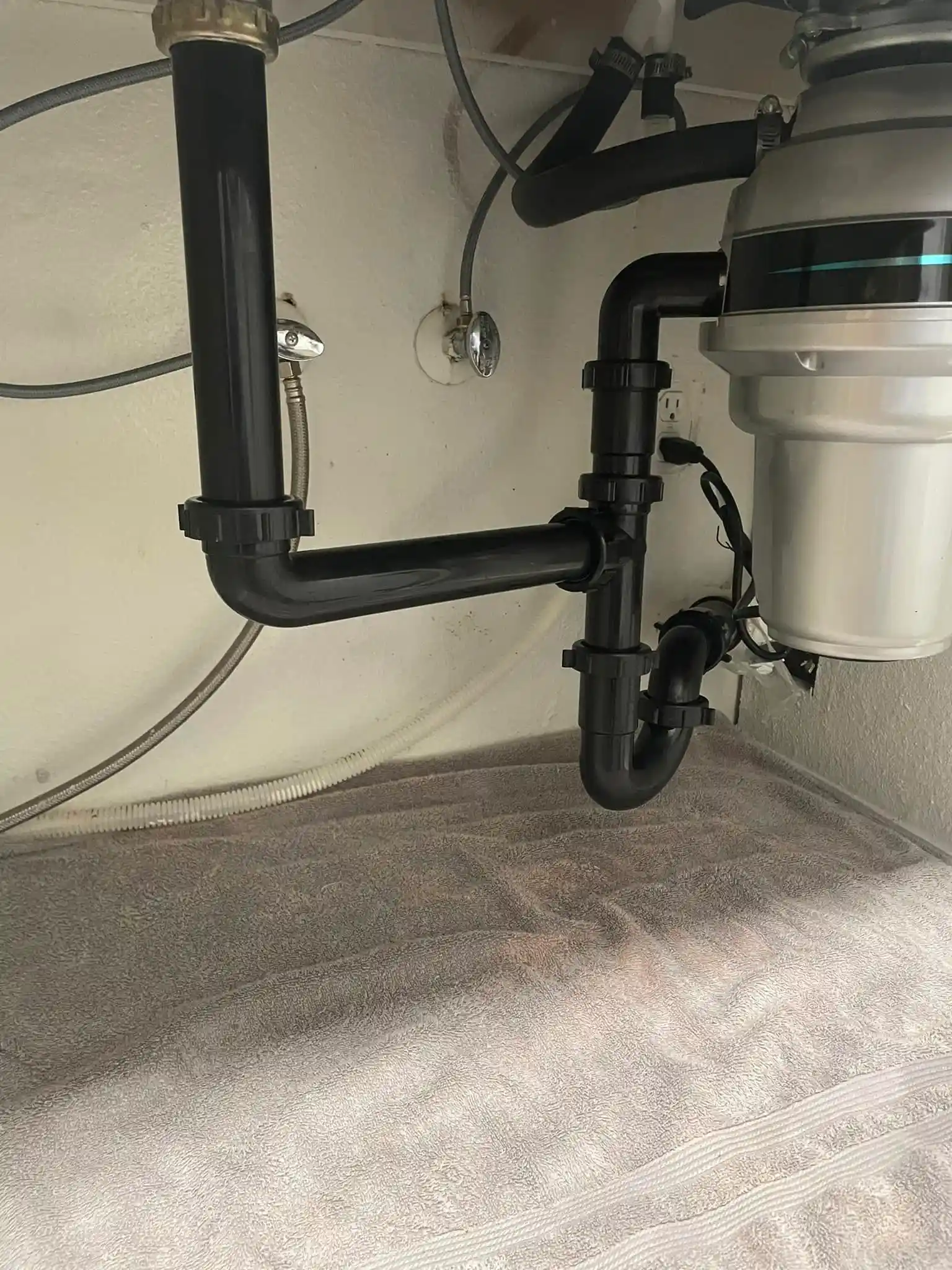
If repair isn't the right call, or you're installing a disposal for the first time, sizing it correctly matters more than most homeowners realize:
Compared to more invasive plumbing work like repiping or sewer line repair, a straightforward disposal installation is a relatively quick, contained job — most installations are completed in a single visit.
Repair vs. Replace: How We Help You Decide
Because disposals are inexpensive relative to in-depth repair labor, this decision is more cost-driven than with bigger plumbing components. General pattern: a jam, tripped reset, or loose connection is worth fixing regardless of age. A worn seal or early motor issue on a unit only a few years old is often worth repairing. A cracked housing, failed motor, or a unit old enough you can't recall installing it is usually more cost-effective to replace.
We'll walk through which category applies and give you a straight answer rather than defaulting to whichever option costs more.
What to Expect During a Garbage Disposal Service Visit
- Describe the symptom. Humming without spinning, leaking, dead unit, or odor — what you're noticing helps us anticipate likely causes before we even arrive.
- Diagnose the specific cause. We identify whether it's a jam, a seal failure, an electrical issue, or something else, rather than assuming.
- Explain repair vs. replace. For anything beyond a simple fix, we walk through the honest cost comparison before doing the work.
- Complete the work. Most repairs and standard installations are same-visit.
- Test before we consider it done. We run the unit with water to confirm proper function and check for leaks before finishing up.
Ready to get your kitchen sink back to normal?
Most standard disposal repairs and installations are completed in a single visit.
Garbage Disposal Service for Rental Properties and HOAs
Garbage disposals are common fixtures in rental units, and disposal misuse is a frequent, recurring maintenance issue across multi-unit properties, since tenant habits vary unit to unit. If you manage rental units or an HOA-governed property and want to standardize on a durable, easy-to-source model, see our commercial and property-manager plumbing page for how we handle fixture and appliance maintenance across a property.
Garbage Disposal Repair Chula Vista: Service and Installation Costs
Cost depends on whether it's a repair or a full new-unit installation, the specific cause, and which horsepower unit you choose if replacing. We don't publish a fixed price for that reason, but we'll explain what we find and give you a real estimate before any work begins. See our full Plumbing Cost & Pricing Guide for how our estimate process works generally.
Chula Vista-Specific Garbage Disposal Considerations
Preventing Garbage Disposal Problems
How Quickly Can You Come Out for a Disposal Issue?
While a dead or leaking unit requires the prompt garbage disposal repair Chula Vista residents expect, for most households it isn't a plumbing emergency in the way a burst pipe or a suspected gas leak is — you can typically keep using the kitchen sink for handwashing and most other purposes while waiting for a scheduled visit.
We prioritize accordingly: routine disposal calls are scheduled promptly during normal business hours rather than treated as urgent-tier dispatch. The one exception is a disposal leaking heavily enough to pool water under the sink or risk cabinet water damage — if that's your situation, tell us when you call so we can prioritize the visit appropriately rather than defaulting to standard scheduling.
Verify We're Licensed Before Any Repair or Installation Work
Chula Vista Plumbing Now is a locally owned, C-36 licensed plumbing company. California's Contractors State License Board (CSLB) maintains a free lookup tool at cslb.ca.gov where you can verify any plumbing contractor's license status before work begins, including ours — we'd rather you check than take our word for it, and we'll give you our license number directly when you call.
Frequently Asked Questions
Troubleshooting & Repair
My disposal hums but won't spin — what's wrong?
Almost always a jam or a stuck flywheel, not a dead motor. You can often clear a minor jam yourself with an Allen wrench in the hex-shaped hole on the unit's underside, after switching off power first. If clearing the jam doesn't restore normal spinning, the issue is likely a failing motor bearing or capacitor.
Why is my disposal leaking from underneath?
Usually a worn internal seal or a cracked housing. On a newer unit, resealing is often worth it; on an older unit, replacement is frequently more cost-effective than a labor-intensive repair. Leaking at the drain connection rather than the unit's body is often just a loose slip-nut — a simpler fix.
My disposal won't turn on at all — is it dead?
Not necessarily. Check the reset button on the unit's underside first, along with whether the outlet or nearby GFCI has tripped. Many “dead” disposals are resolved by one of those two checks. If the reset button won't hold or power is confirmed present but the unit still won't engage, that typically points to actual motor failure.
Can I fix a jammed disposal myself?
Often, yes. Most units have a hex-shaped opening for an Allen wrench made for manually freeing a jam — switch off power first, then rotate the flywheel back and forth. This is one of the more genuinely DIY-fixable plumbing issues, and we'd rather tell you that than sell you an unnecessary service call.
Why does my disposal smell bad even after I clean it?
Persistent odor after basic cleaning (ice, cold water, dish soap) often means buildup has reached further down into the trap or drain line than a disposal cleaning alone can reach — worth having checked rather than repeatedly masking with citrus peel.
Prevention & Usage
What should I never put down a garbage disposal?
Fibrous vegetables like celery, grease and cooking fat, bones, coffee grounds, and starches like pasta or rice that expand with water. These are common causes of both disposal jams and downstream kitchen drain clogs.
Does putting grease down the disposal really cause drain clogs?
Yes — grease and fat solidify as they cool, coating the inside of the disposal and the pipes beyond it, a well-documented and frequent cause of kitchen drain clogs, not just a disposal-specific issue.
Can a garbage disposal issue affect my whole kitchen drain?
It can, particularly if what's been going down the disposal (grease, fibrous scraps, starches) has contributed to a clog further down the drain line. If drainage issues extend beyond just the disposal, that's a sign to look at the broader drain line rather than the disposal alone.
Installation & Replacement
Do you repair disposals, or only install new ones?
Both. We provide the garbage disposal repair Chula Vista homeowners trust when repair is the sensible choice, and we install new units when a unit has failed beyond reasonable repair or you're upgrading as part of a kitchen project.
How do I know if I should repair or replace my disposal?
A simple jam, tripped reset, or loose connection is worth fixing regardless of age. A worn seal or early motor issue on a newer unit is often worth repairing. A cracked housing, failed motor, or an old unit is usually more cost-effective to replace. We'll walk through which situation applies to you honestly.
What size garbage disposal do I need for my household?
It depends on household size and cooking habits — a lighter-use household is often well served by a 1/3 to 1/2 horsepower unit, while a larger household or heavier daily cooking typically benefits from a 3/4 to 1 horsepower unit. We help you size it correctly rather than defaulting to whichever is cheapest.
Is a broken garbage disposal a plumbing emergency?
Generally, no. It's a genuine inconvenience, but most households can keep using the sink for other purposes while waiting for a scheduled visit, so we treat routine disposal calls as prompt scheduling rather than emergency-tier dispatch. A disposal leaking heavily enough to risk cabinet water damage is worth flagging as higher priority when you call.
How long does a garbage disposal installation take?
Most standard installations are completed in a single visit, a relatively contained job compared to more invasive plumbing work like repiping or sewer line repair — assuming the new unit is compatible with your existing under-sink connections, which we confirm beforehand.
Do you install disposals as part of a kitchen remodel?
Yes — whether it's a standalone replacement or part of a broader kitchen remodel, we handle sizing, compatibility confirmation, and installation as part of that scope.
Dealing With a Jammed, Leaking, or Dead Garbage Disposal?
Whether it's a stubborn jam, a leak you've noticed under the sink, a unit that's gone completely silent, or you're ready to install a new one as part of a kitchen upgrade, we provide the honest garbage disposal repair Chula Vista households rely on. We'll diagnose it clearly, including telling you when a DIY fix is genuinely enough.