
Your sewer lateral is the pipe connecting your home to the City's main sewer line — and per City of Chula Vista policy, you, the property owner, are responsible for maintaining and repairing it, not the City
Slow drains, sewage odor, or an active backup?
Sewer Line Repair Chula Vista — Sewer Lateral Service
Sewer line repair Chula Vista is the focus of this local guide. If you're dealing with slow drains throughout your house, sewage odor in your yard, or an active backup in Chula Vista, California, call (619) 558-3293 right away — this is one of the more time-sensitive plumbing issues, and delaying it usually makes the eventual repair more invasive and more expensive. If you're here because you got a notice, a permit requirement, or another plumber mentioned your sewer lateral and you're trying to understand what that actually means, you're in the right place — this page covers both.
C-36 Licensed
Camera-Verified Diagnosis
Fast answers · local expertise
Key Takeaways
The two leading causes of lateral failure locally are tree-root intrusion and FOG (fats, oils, grease) buildup
Trenchless repair options exist that don't require tearing up your entire yard
Private contractor work in the public right-of-way requires City permits (Forms 5515 and 4569) — we handle that process
Call (619) 558-3293 for diagnosis, including camera inspection where useful
The distinction that confuses almost everyone
What Is a Sewer Lateral, and How Is It Different From the City's Sewer Main?
Your home's wastewater travels through two separate pipe systems, and the line between them matters more than most homeowners realize.
The Sewer Lateral
The pipe running from your house to the connection point at the property line (sometimes further, depending on the specific easement). This section is private property, plumbing-wise — even though part of it may sit under land you don't think of as "yours" to maintain.
The Sewer Main
The City-owned pipe running under the street that collects wastewater from every property's lateral and carries it to treatment. The City owns, maintains, and repairs the main line.
The confusion almost every homeowner runs into: a problem can feel like "the city's problem" because it involves pipes under the ground near the street — but if the failure is in your lateral rather than the main, it's yours to fix. This is exactly the distinction the next section covers in detail.
The single most misunderstood plumbing issue in Chula Vista
Who's Responsible for Sewer Lateral Repair in Chula Vista?
This is the main reason we built this page the way we did — almost nowhere else explains it in plain language.
Per the City of Chula Vista's own sewer lateral policy, the property owner — not the City — is responsible for maintaining, repairing, and permitting work on the sewer lateral, from the connection point at the property line to the house. Most homeowners don't learn this until one of three things happens: they get a bill, they run into a permit requirement, or a plumber flags a problem while working on something else.
You Can't Wait for the City
If you call the City about a lateral problem, the response will typically be that this falls outside their maintenance responsibility once the issue is confirmed to be on the private-lateral side of the connection.
You're Responsible for Permitting
Even for work happening under a public street or sidewalk, if the lateral needs replacement in that stretch.
It Surfaces at Home Sale Time
If you're buying or selling in Chula Vista, a sewer lateral in poor condition is a real, sometimes expensive, disclosure and negotiation item — worth understanding before it becomes a surprise.
Some of these are easy to dismiss as a one-off clog
Signs You May Have a Sewer Lateral Problem
Slow drainage throughout the whole house, not just one sink or tub — different from a single fixture clog and often points toward the main line inside the house or the lateral itself
Gurgling sounds from drains or toilets, especially when running water elsewhere in the house
Sewage odor in the yard, particularly near where the lateral runs toward the street
Unusually lush or soggy patches of grass along the lateral's path — wastewater leaking underground can act like unintended irrigation
Recurring backups that a single drain-cleaning visit doesn't permanently resolve
Sewage backing up into the lowest drain in the house — see our Emergency Plumbing page if this is happening right now; stop using household drains until we arrive
If you're noticing more than one of these at once, especially slow drainage combined with yard odor, it's worth a camera inspection rather than waiting to see if it resolves on its own.
Two leading causes, named directly by the City
What Causes Sewer Lateral Failure in Chula Vista
Tree-Root Intrusion
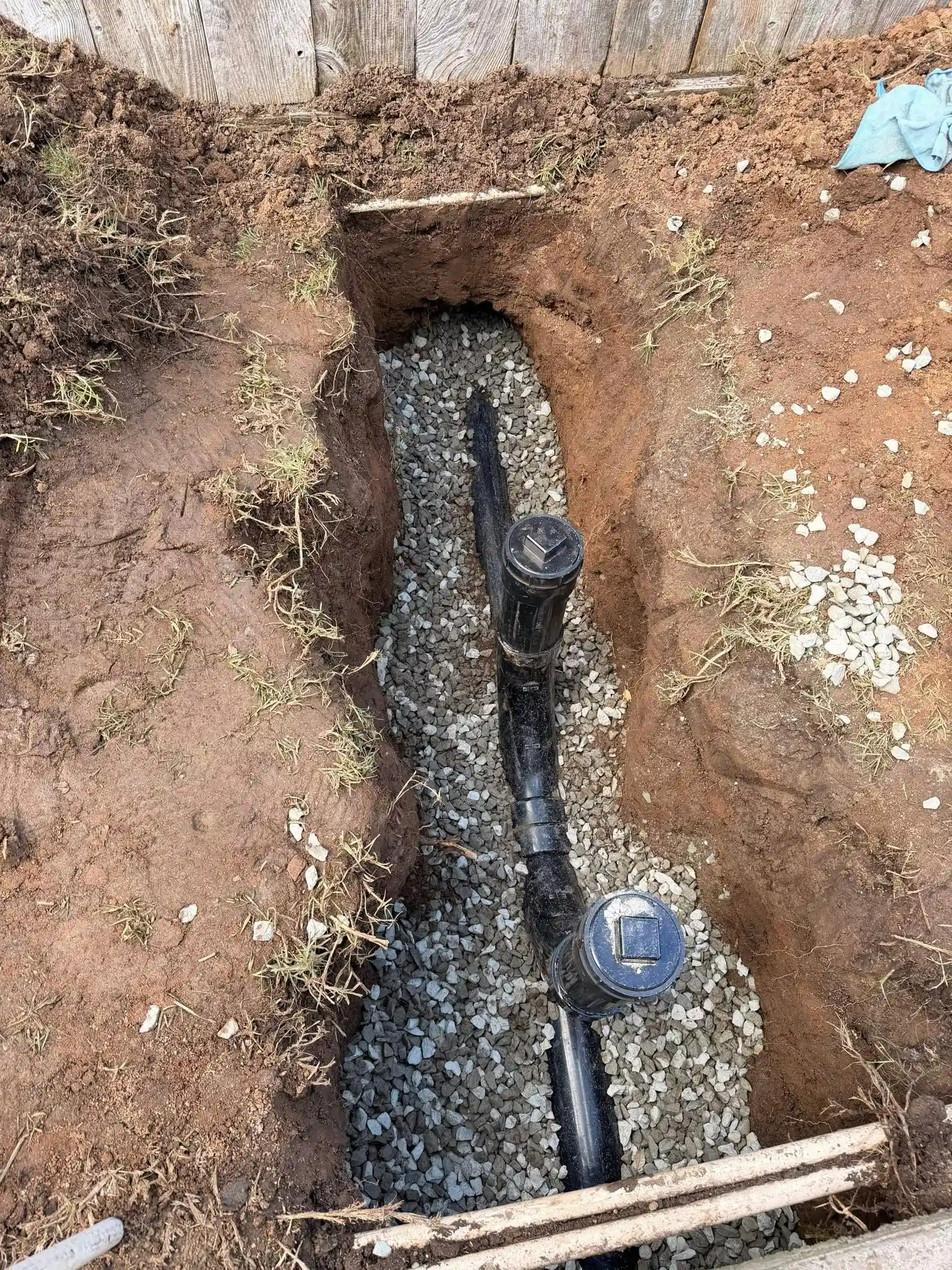
Roots seek out moisture and can infiltrate even small cracks or joints, then expand and cause blockages or structural damage over time — a particular issue in older, established neighborhoods, but increasingly real in newer east-side communities as landscaping matures.
FOG Buildup
Grease poured down kitchen drains solidifies inside pipes over time, narrowing the interior diameter until flow is restricted or blocked entirely — one of the more preventable causes of a lateral emergency.
Pipe Material and Age
Older cast-iron laterals, common in established neighborhoods, are more prone to corrosion, cracking, and joint failure. Newer PVC is more resistant to corrosion but not immune to root intrusion or improper original installation.
Ground Shifting and Settlement
Less common, but soil movement (including mild seismic activity) can stress or misalign pipe joints over time, particularly in areas with clay-heavy soil.
Not just cosmetically different homes
How Chula Vista's Two Housing Eras Affect Your Lateral Risk
Chula Vista's older, established neighborhoods and its newer master-planned east-side communities carry genuinely different lateral risk profiles — different pipe materials, ages, and landscaping histories that change what's likely to go wrong and when.
Older, Established Chula Vista
Northwest and Southwest Chula Vista, Terra Nova, and similar established tracts — homes here were typically built with cast-iron sewer laterals, which corrode and crack from decades of service, and sit under mature, decades-old street trees whose root systems have had a long time to find their way into any small crack or joint. If you haven't had a camera inspection in several years, it's one of the more worthwhile preventive checks you can do.
Newer Master-Planned Communities
Eastlake, Otay Ranch, Rancho del Rey, and similar east-side areas — homes here generally have PVC laterals, which resist corrosion far better than cast iron, so the primary long-term risk is root intrusion as neighborhood landscaping matures. A lateral installed in the 1990s-2000s alongside young landscaping is now sitting near trees with 20-30 years of root growth — a genuinely growing risk category, not a one-time concern.
Neither profile means you're guaranteed a problem — plenty of homes in both categories go decades without a lateral issue. But knowing which profile your home fits helps set realistic expectations for what symptoms to watch for and how proactive to be about inspection.
No guessing from surface symptoms
How We Diagnose a Sewer Lateral Problem
Guessing at a sewer lateral issue from surface symptoms alone is how homeowners end up paying for the wrong repair — a drain-cleaning visit that temporarily clears a blockage caused by a structural crack, for example, feels like a fix but isn't.
1
Symptoms & History
We ask when it started, whether it's gotten worse, prior sewer work, and roughly how old your home and its plumbing are.
2
Sewer Camera Inspection
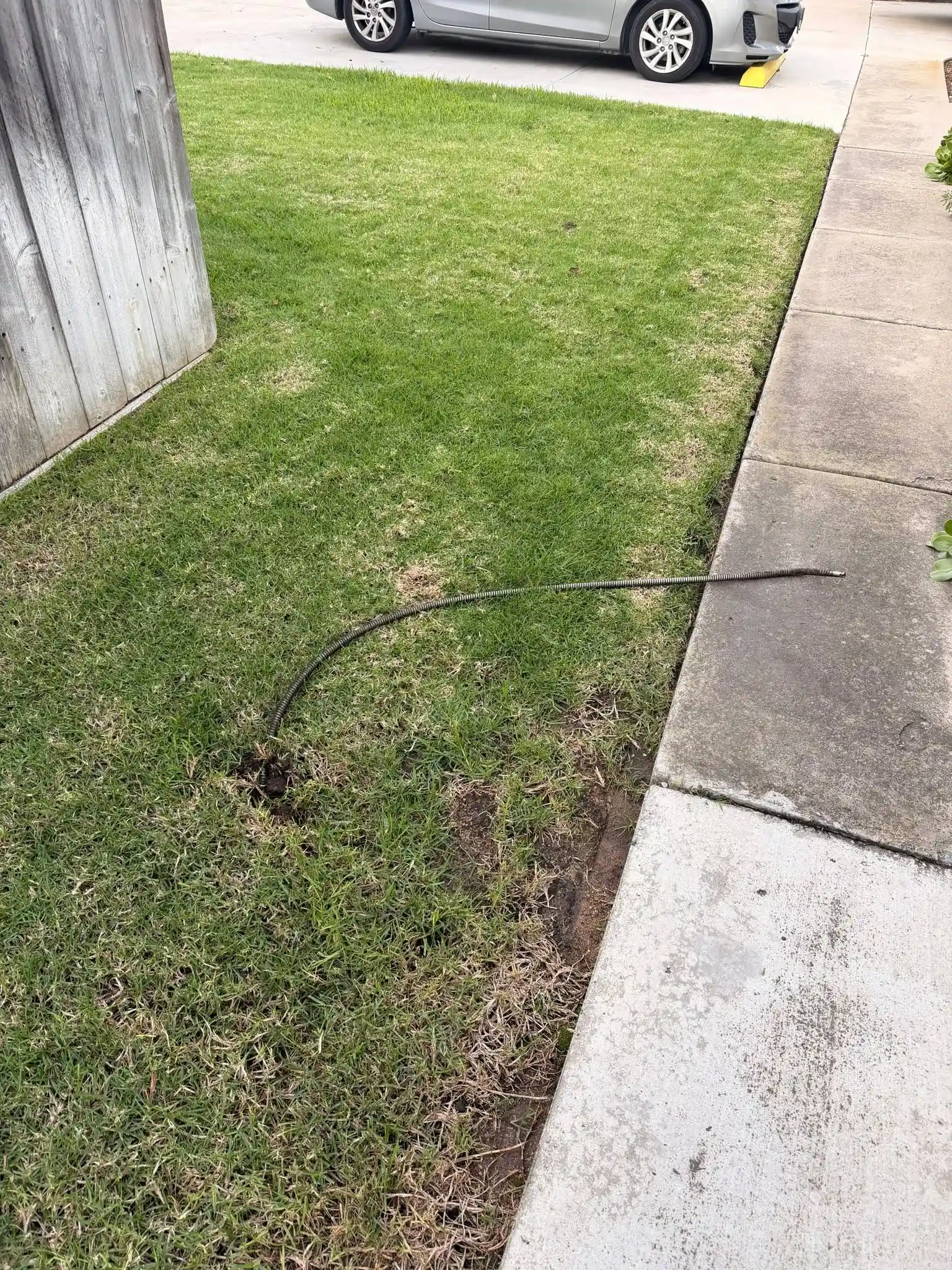
A waterproof camera is fed through the lateral to visually identify the problem — root intrusion, a cracked or collapsed section, grease buildup, or a misaligned joint — and pinpoint exactly where it is.
3
We Explain Your Real Options
Including whether a full replacement is actually necessary or a more targeted, less invasive repair will resolve it — we don't quote sewer lateral work without seeing the camera footage first.
Repair Options: Trenchless vs. Traditional Dig-and-Replace
Trenchless Repair
- Yard disruption
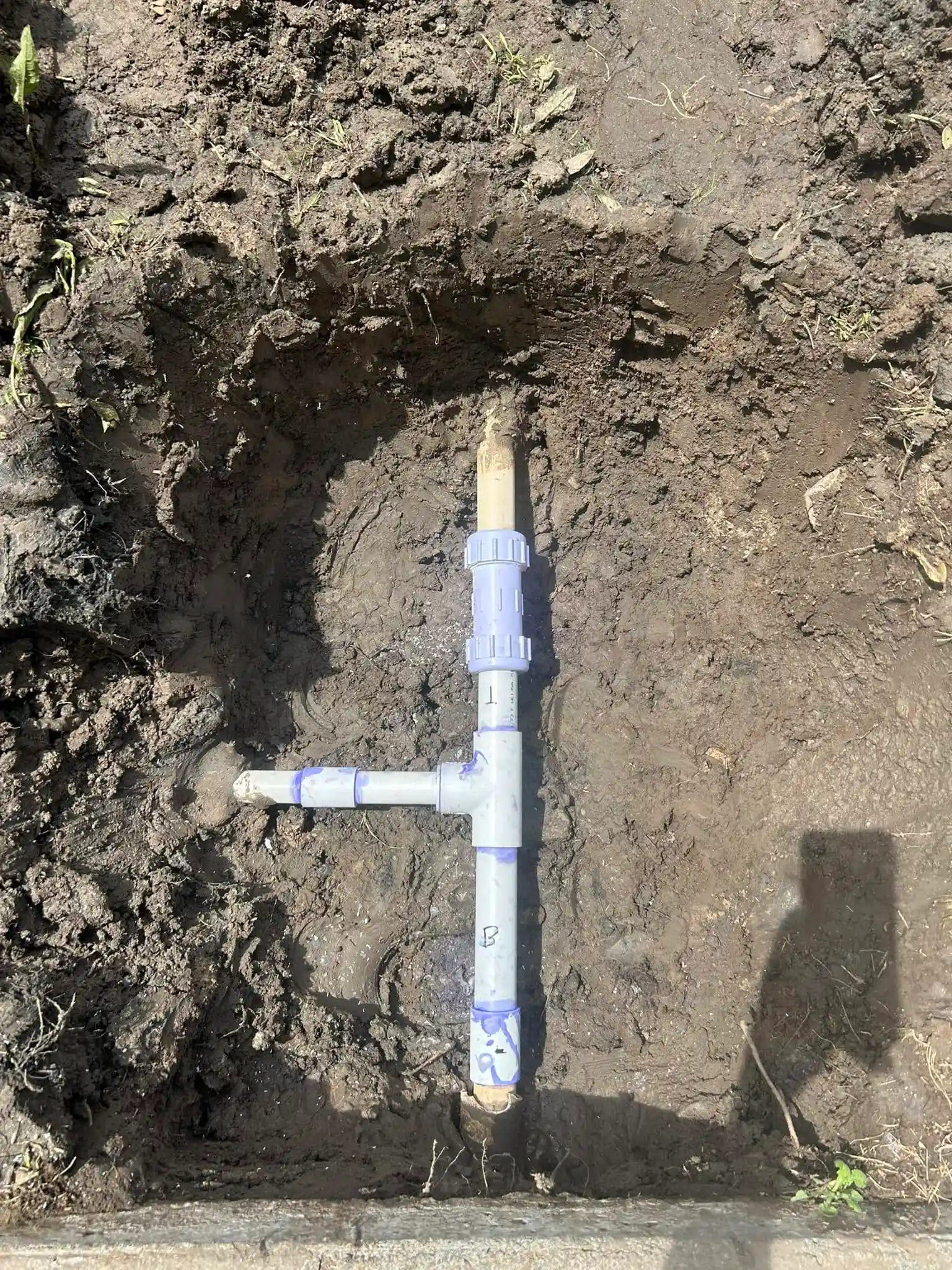
- Minimal — typically one or two small access points
- Best suited for
- Root intrusion, cracks, and many full-length replacements where the lateral's general path is sound
- Timeline
- Often faster overall due to less excavation and restoration work
- Landscaping/hardscape impact
- Low
- Permit requirements
- Still required for work in the public right-of-way (see below)
Traditional Dig-and-Replace
- Yard disruption
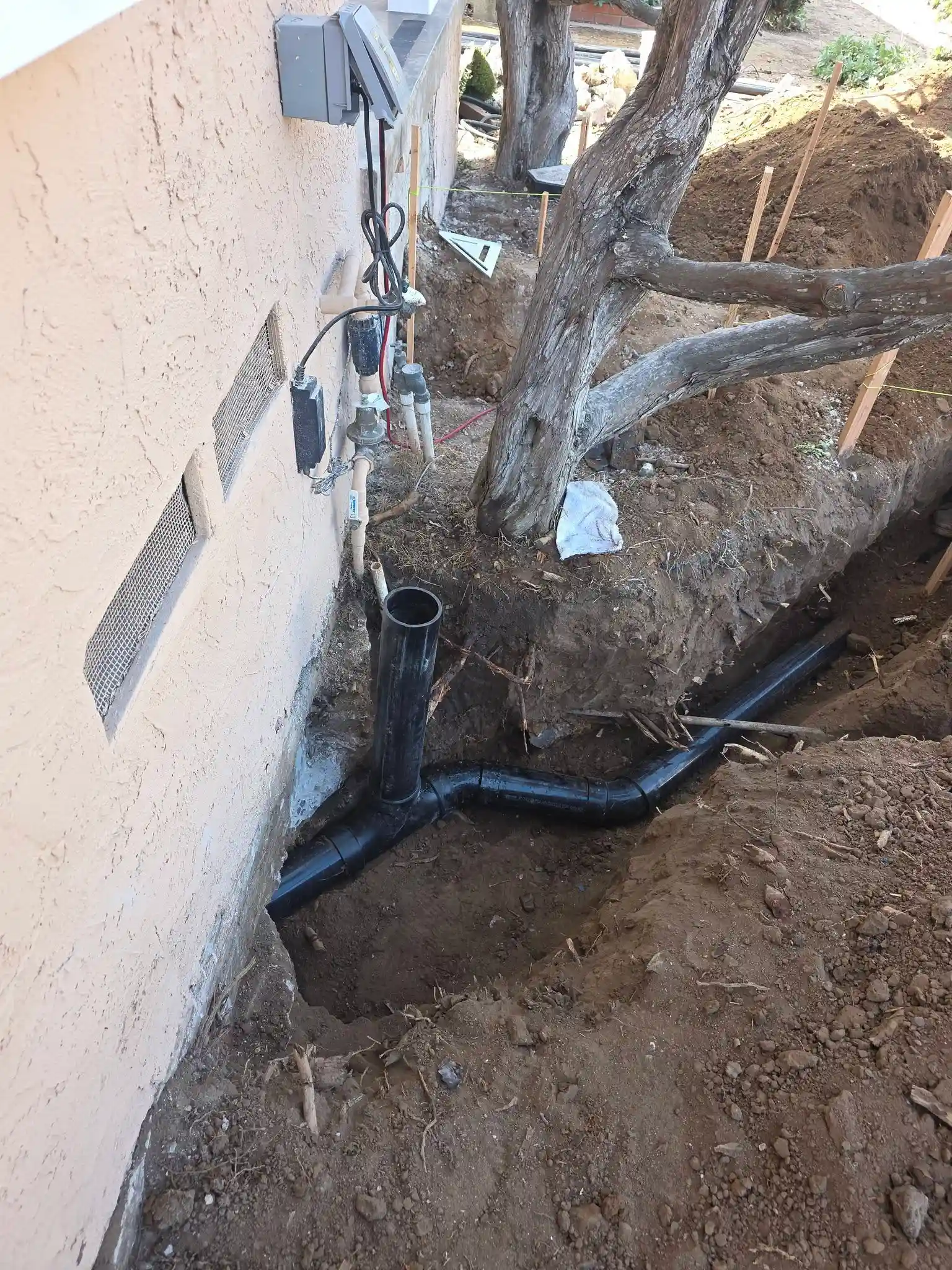
- Full trench along the lateral's path
- Best suited for
- Severely collapsed sections, laterals needing rerouting, or situations where trenchless isn't viable
- Timeline
- Longer — excavation, repair, backfill, and yard/hardscape restoration
- Landscaping/hardscape impact
- Can require removing and replacing landscaping, concrete, or pavers along the trench path
- Permit requirements
- Same permit requirements apply
No made-up price range
Sewer Lateral Repair Cost in Chula Vista
We're not going to publish a made-up price range here — sewer lateral repair costs vary enormously based on the length of the lateral, the repair method, the depth and location of the problem, and whether the section running under the public right-of-way is involved. What genuinely affects cost:
Repair method. Trenchless is often (not always) less expensive overall once you account for reduced excavation and landscape restoration, but the specific damage determines whether it's viable.
Length and depth of the affected section. A short, shallow repair near the house is a different job than a full-length replacement running under the sidewalk to the main connection.
Permit fees. Work in the public right-of-way requires City permitting, which carries its own fees separate from the repair itself.
Landscape or hardscape restoration, if traditional excavation is required.
For our general pricing philosophy and how we handle estimates, see the Plumbing Cost Guide. For this specific job, the honest answer is: we can't give you a real number until we've seen the camera inspection, and we'll walk you through the estimate before any repair work begins.
What the City requires
The Permit Process — What the City Requires
If your sewer lateral needs work in the public right-of-way (the section running under the sidewalk or street toward the main connection), the City of Chula Vista requires specific permitting before that work begins — this applies regardless of who's doing the work, but it's especially important to understand when hiring a private contractor:
- Construction Permit (Form 5515) — generally required for the physical construction/excavation work itself.
- Utility Permit (Form 4569) — generally required for work affecting utility infrastructure in the public right-of-way.
Exact requirements can vary based on the specific scope of work, so we confirm current permit requirements with the City as part of any job that involves right-of-way work, rather than assuming last year's rules still apply. We handle this process as part of the job — it's not something you have to navigate on your own, but it is something to budget time and, in some cases, fees for.
Why this matters beyond just "following the rules": unpermitted work in the public right-of-way can create real problems down the line — from difficulty during a future home sale to the City requiring the work to be redone properly at the homeowner's expense if it's discovered later. Skipping the permit step to save time rarely actually saves money once you account for that risk.
Dealing With a Sewage Backup Right Now?
If sewage is actively backing up into your home, this is an emergency — stop using every drain in the house (toilets, sinks, showers, washing machine) until help arrives, since adding more water anywhere in the system can push the backup somewhere new. Full safety steps and what to expect: see our Emergency Plumbing page. Call (619) 558-3293 now if this is actively happening.
Simple, low-cost habits
Preventing Future Sewer Lateral Problems
A few simple, low-cost habits meaningfully reduce lateral failure risk over time, especially FOG-related blockages, which are among the most preventable causes we see:
- Never pour grease, oil, or fat down a kitchen drain — let it cool and dispose of it in the trash instead.
- Be mindful of what you flush — only human waste and toilet paper; wipes (even "flushable" ones), paper towels, and feminine hygiene products are common contributors to blockages.
- Consider a periodic camera inspection for older homes or homes with mature trees near the lateral's path — catching early-stage root intrusion is far cheaper than waiting for a full backup.
- Know your lateral's approximate path and age, especially if you're planning landscaping work near it — new tree plantings directly over or near a lateral increase future root-intrusion risk.
Excavation and permitting raise the stakes
Verify We're Licensed Before Any Excavation or Permit Work
Sewer lateral work often involves excavation and City permitting — exactly the kind of job where hiring an unlicensed operator creates real legal and financial risk beyond just a bad repair. Chula Vista Plumbing Now holds an active California C-36 plumbing contractor license. You can verify any contractor's license for free through CSLB's online license lookup tool — we'll provide our license number directly when you call. For more on what to check before hiring any plumber for a major repair, see How to Choose a Licensed Plumber in Chula Vista.
Frequently Asked Questions
Sewer Line & Lateral Repair FAQs
Per City of Chula Vista policy, the property owner is responsible for maintaining and repairing the sewer lateral from the connection point at the property line to the house — not the City. This includes permitting any work needed in the public right-of-way.
It depends on the repair method, the length and depth of the affected section, and whether right-of-way permitting is involved. We provide a real estimate after a camera inspection, not a guess over the phone. See our pricing guide for general cost philosophy.
If the work affects the section of your lateral in the public right-of-way (typically under the sidewalk or street), yes — the City of Chula Vista generally requires a Construction Permit (Form 5515) and a Utility Permit (Form 4569). We handle this process as part of the job.
The two most common causes are tree-root intrusion and FOG (fats, oils, grease) buildup. Pipe age and material (older cast iron vs. newer PVC) and, less commonly, ground shifting also play a role.
Often, yes — trenchless repair methods can address many root-intrusion and crack issues with minimal excavation. Whether it's viable depends on what a camera inspection shows. See the comparison table above.
A single slow drain is usually a simple clog. Whole-house slow drainage, gurgling from multiple fixtures, yard odor, or recurring backups after a drain-cleaning visit point toward a lateral issue worth a camera inspection. See our Drain Cleaning page for more on single-fixture clogs.
An active backup is an emergency — see our Emergency Plumbing page. Slow drainage or early symptoms without an active backup can usually be scheduled for diagnosis rather than treated as an emergency, though addressing it sooner tends to mean a less invasive repair.
This depends entirely on your specific policy and the cause of failure — we're not in a position to advise on insurance coverage, and you should check directly with your insurer. What we can tell you is the City's liability position (yours, not the City's) and give you an accurate repair diagnosis to bring to that conversation.
It's a reasonable step to consider, especially for older homes with cast-iron laterals or homes with mature trees near the lateral's path. A camera inspection gives you a clear, documented answer instead of an unknown — useful for negotiating repairs before closing or simply knowing what you're taking on as the new owner.
Real diagnosis, right fix
Get Your Sewer Lateral Diagnosed the Right Way
Whether you're dealing with active symptoms or just found out you're responsible for a pipe you didn't know was yours to maintain, the next step is the same: an accurate diagnosis before you spend money on a guess. Call (619) 558-3293 for camera inspection and a real assessment of your options — licensed, local, and honest about what your lateral actually needs.
Part of our full range of Plumbing Services — or head back to the homepage.
Local planning guidance
Sewer Line Repair Chula Vista Planning Guide
Sewer symptoms deserve a cause-based evaluation because repeated clearing, damaged pipe, root intrusion, offsets, bellies, and access limitations can call for very different responses. This guide helps property owners prepare for diagnosis and compare the resulting scope.
Start With the Symptoms
When comparing sewer line repair chula vista, begin with the symptoms rather than a preferred repair. Note when the problem started, whether it is constant or intermittent, which fixtures or areas are affected, and what changed just before it appeared. For homeowners, landlords, HOAs, and property managers, that short history helps distinguish an isolated nuisance from a system issue. Photographs, utility-bill changes, and a simple timeline can make the first conversation more useful while keeping attention on the actual condition instead of assumptions.
Match the Service to the Cause
The right sewer line repair chula vista approach depends on identifying the cause before selecting equipment or authorizing work. Recurring building-wide backups, multiple slow fixtures, yard odors, saturated areas, cleanout overflow, and camera findings can help separate a removable blockage from a structural or alignment problem. A careful evaluation connects the visible symptom to the most likely source, considers access and surrounding materials, and explains what can be confirmed now versus what may require an additional test. That process supports a proportionate recommendation and reduces the chance of paying for a temporary response to a recurring problem.
Plan for Access and Property Conditions
Before scheduling sewer line repair chula vista, consider how the property itself may affect access and sequencing. Mature trees, older laterals, additions, property-line routing, easements, slopes, hardscape, and the relationship between private and public responsibility can influence access and planning. Clear access to shutoffs, equipment, cleanouts, work areas, and parking can shorten setup time. If walls, flooring, landscaping, tenants, pets, gates, or association rules are involved, sharing those details early helps the visit proceed with fewer surprises and allows protective measures to be planned before work begins.
Understand the Estimate
A written sewer line repair chula vista estimate should separate the known scope from conditions that cannot be confirmed until access or testing occurs. Useful estimates describe labor, materials, included cleanup, expected disruptions, and any choices that could change the total. Sewer work may be affected by diagnostic steps, depth, length, material, access, excavation, trenchless feasibility, utility conflicts, permits when applicable, surface restoration, and disposal. Asking what is included, what would trigger a change order, and what alternatives exist makes it easier to compare recommendations on equal terms instead of focusing only on the first number.
Coordinate Timing and Communication
Good sewer line repair chula vista communication includes timing, access, water shutoff needs, and a realistic explanation of what occupants may experience. Owners may need to coordinate occupants, parking, yard access, utility marking, association approval, neighboring access, and temporary limits on water use during parts of the work. A clear point of contact, current phone number, and approval process are especially helpful when the person authorizing work is not at the property. Confirming these details in advance keeps decisions moving and helps everyone understand the next step without relying on vague arrival or completion promises.
Reduce Repeat Problems
Timely sewer line repair chula vista work should address the immediate concern while also considering why it happened. Keeping grease, wipes, roots, and recurring warning signs under review can help, but maintenance should not be used to disguise confirmed structural damage that needs a different plan. Prevention does not mean replacing everything or purchasing unnecessary maintenance. It means identifying practical actions—such as monitoring a fixture, correcting usage patterns, scheduling an appropriate inspection, or planning a future upgrade—that match the condition, age, and risk of the system.
Know When the Situation Is Urgent
Requests for sewer line repair chula vista can become urgent when there is uncontrolled water, sewage exposure, a gas odor, electrical risk, property damage, or loss of an essential fixture. Active sewage discharge, backup into occupied areas, exposure risk, loss of all drainage, or wastewater approaching electrical systems should be communicated immediately and kept isolated. When safety is uncertain, stop using the affected system, protect people from the area, and describe the exact condition when calling. A calm description of what is happening helps determine whether immediate action, a utility response, or a normally scheduled visit is appropriate.
Confirm the Work Before Completion
After sewer line repair chula vista, review what was found, what was completed, and what remains to be watched. Final documentation should describe the repaired section, material and method, tests or camera verification performed, restoration boundaries, and any remaining conditions outside the completed scope. Keep estimates, invoices, photographs, model information, and maintenance notes with the property records. If a symptom returns, those records give the next technician useful context and help distinguish a new problem from the original condition. Clear closeout information is part of a professional service experience, not an optional extra.
For sewer line repair Chula Vista property owners should begin with the backup pattern, cleanout behavior, prior clearing history, camera information if available, and the location of visible symptoms. Those details make the diagnostic plan more focused.